The short answer
Salem is not one town. It is at least four neighborhoods stitched together, and each one has a different price band, different feel, and different buyer. Here is the local's map, drawn street by street.
There is no such thing as "Salem, NH", there are four Salems
If you type "homes for sale in Salem NH" into Zillow, the pins scatter across 25 square miles and the algorithm treats all of it as one market. It is not. North Salem behaves like a rural town. Downtown Salem behaves like a small city center. Tuscan Village behaves like a planned suburb. The Canobie Lake side behaves like a lake community that happens to have a zip code. The median price you see on Zillow for "Salem NH" is a meaningless average of four submarkets that do not share buyers, do not share housing stock, and do not share character.
Out-of-town buyers almost always lose six to twelve weeks trying to figure this out on their own. They will look at a listing on Lowell Road and another one in Tuscan Village and think they are comparing apples. They are not. The local's job, if you are relocating from Massachusetts or shopping Salem for the first time, is to tell you which of the four Salems you are actually looking at. This is that conversation, written down.
A quick note on method: the price bands below are feel-of-the-market ranges for spring 2026, not a CMA. The ranges help you read listings. For a real number on a real house, book a 30-minute call and we will pull comps together.
North Salem: older colonials, stone walls, the quietest Salem
North Salem starts where the commercial strip ends. You take Route 28 north past the mall exit, past the Market Basket, and once you get to the intersection at Lowell Road you are in a different Salem. Older colonials on half-acre lots, a few farmhouses, the stone-wall-and-tree-line streets that look nothing like the Tuscan Village side. Brady Avenue, Pond Street, Ermer Road. That is the neighborhood you drive into when the buyer says they want a quieter Salem but does not want to leave the town line.
The housing stock is mostly 1970s and 1980s colonials with a scatter of older capes and a handful of farmhouses that predate most of the rest of the town. Lot sizes open up here. Half-acre is common, three-quarters and full acres show up on the side streets. The streets have less traffic than anywhere else in Salem, and a few of them still feel rural enough that you will see a horse trailer parked in a driveway.
Price band: this is typically the most accessible of the four Salems for a detached home in reasonable condition. Mid-range colonials here often come in slightly under the Salem median, because the commercial tax base and the walkable amenities are concentrated down by Route 97 and Tuscan, not up here. If you are buying for land and quiet over walkability, North Salem is usually the answer. If you are buying to walk to coffee, it is the wrong answer.
Who it fits: buyers who want Salem taxes and schools without the Salem traffic. Families with kids who want the lot. Downsizers who already live in Salem and want to stay in the same school district for the grandkids without being on top of the mall.
Downtown Salem and the Main Street corridor: the widest spread in town
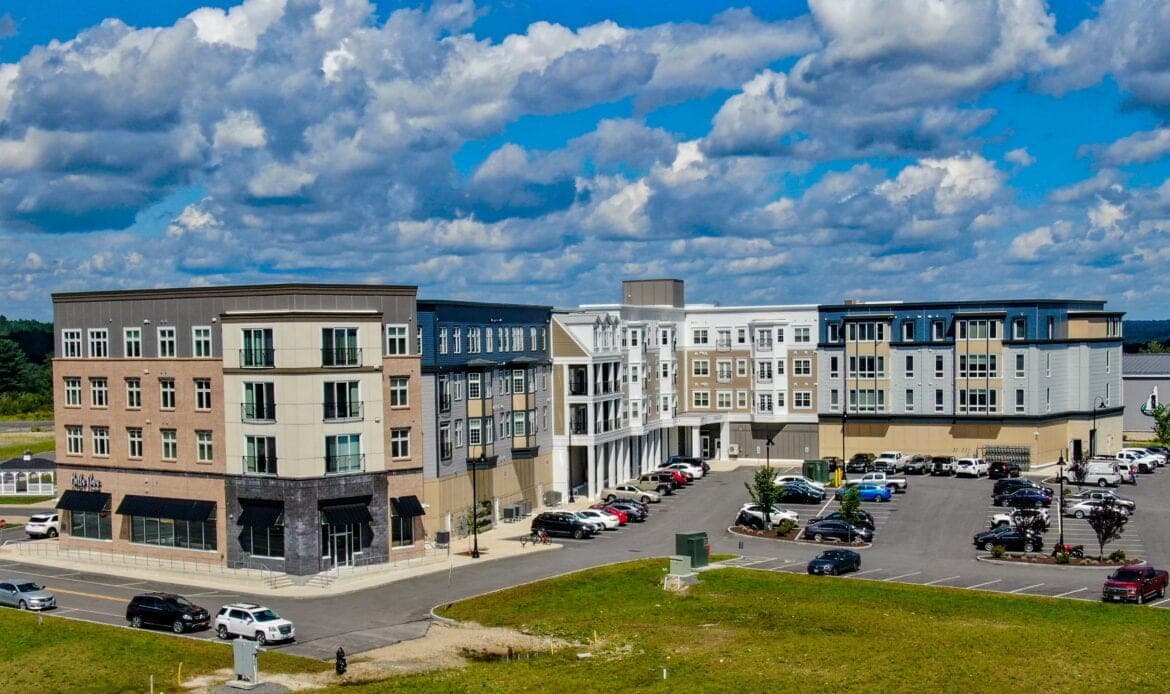
Main Street, Route 97, the stretch from the Salem Common down toward the Methuen line. This is the oldest slice of Salem and the most varied. The housing stock runs the whole length from genuine pre-1900 colonials with the original fireplaces still in the wall to 1950s capes to 1980s multi-families. You will find a $425,000 starter that needs a kitchen and a $950,000 restored Victorian on the same half-mile of road.
The last five years have been kind to downtown. LaBelle Winery brought real dinner traffic. Copper Door is steady on weekends. A handful of the older retail bays have turned over to coffee, breweries, and small independents. It is not Portsmouth, nobody is pretending it is Portsmouth, but the corridor has more reasons to walk it now than it did in 2019. That is a real shift for resale value on the houses close to it.
Price band: the widest spread in Salem. Entry-level if the house needs work. High five hundreds to high six hundreds for a clean, move-in-ready renovation. The genuinely old character homes, fully restored, clear seven figures when the right one hits. This is the Salem section where the listing photos mislead most often. A $500,000 house on Main Street might be a gut job or might be a dream, and you cannot tell from the MLS thumbnails.
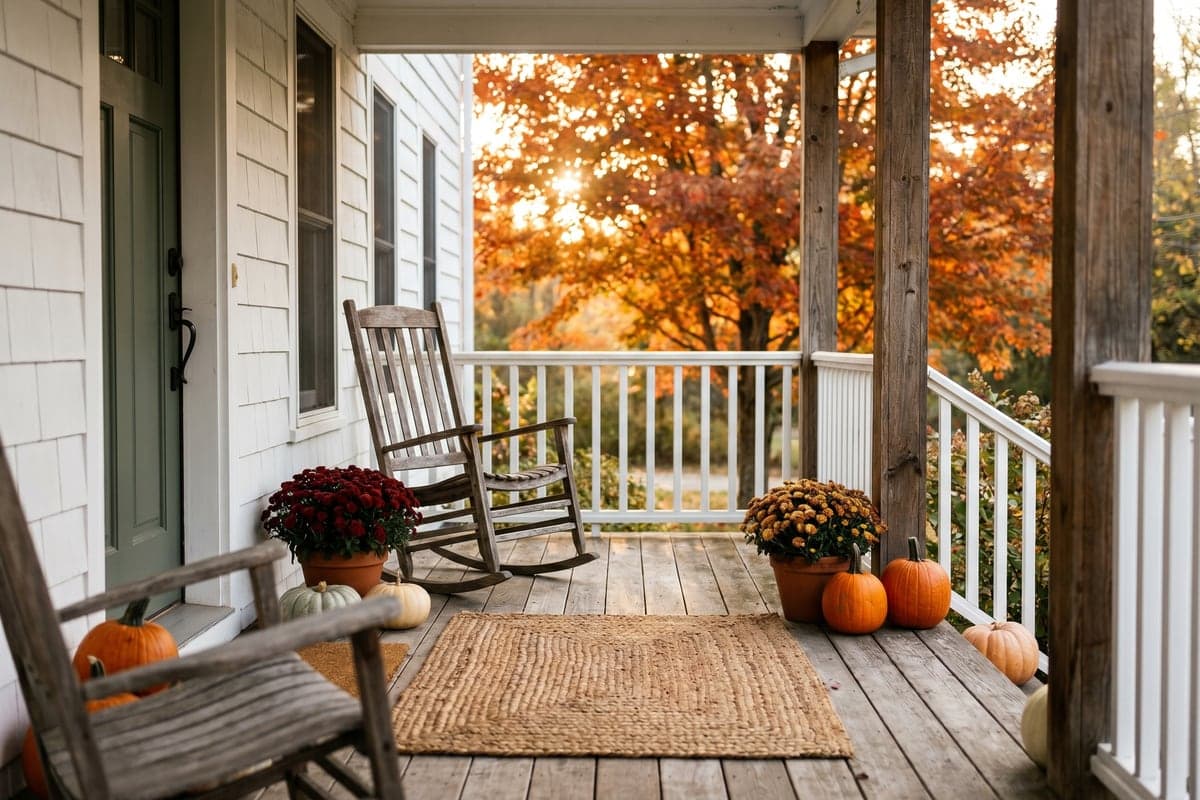
Who it fits: buyers who want walkability and do not mind traffic noise on the weekends. MA relocators who are used to a downtown and want that feel. Anyone who wants character, original woodwork, and a front porch that looks like a front porch should look.
Tuscan Village: the Salem that does not feel like Salem
The confusing part of Tuscan Village for out-of-town buyers is that it is technically Salem but does not feel like the rest of Salem. The townhomes are new-construction, HOA-governed, and built around the Market. Salem's older neighborhoods do not have an HOA and never will. If you grew up in a town with HOAs or are moving from a planned MA community like Westford's villages, Tuscan will feel like home faster than the rest of Salem will.
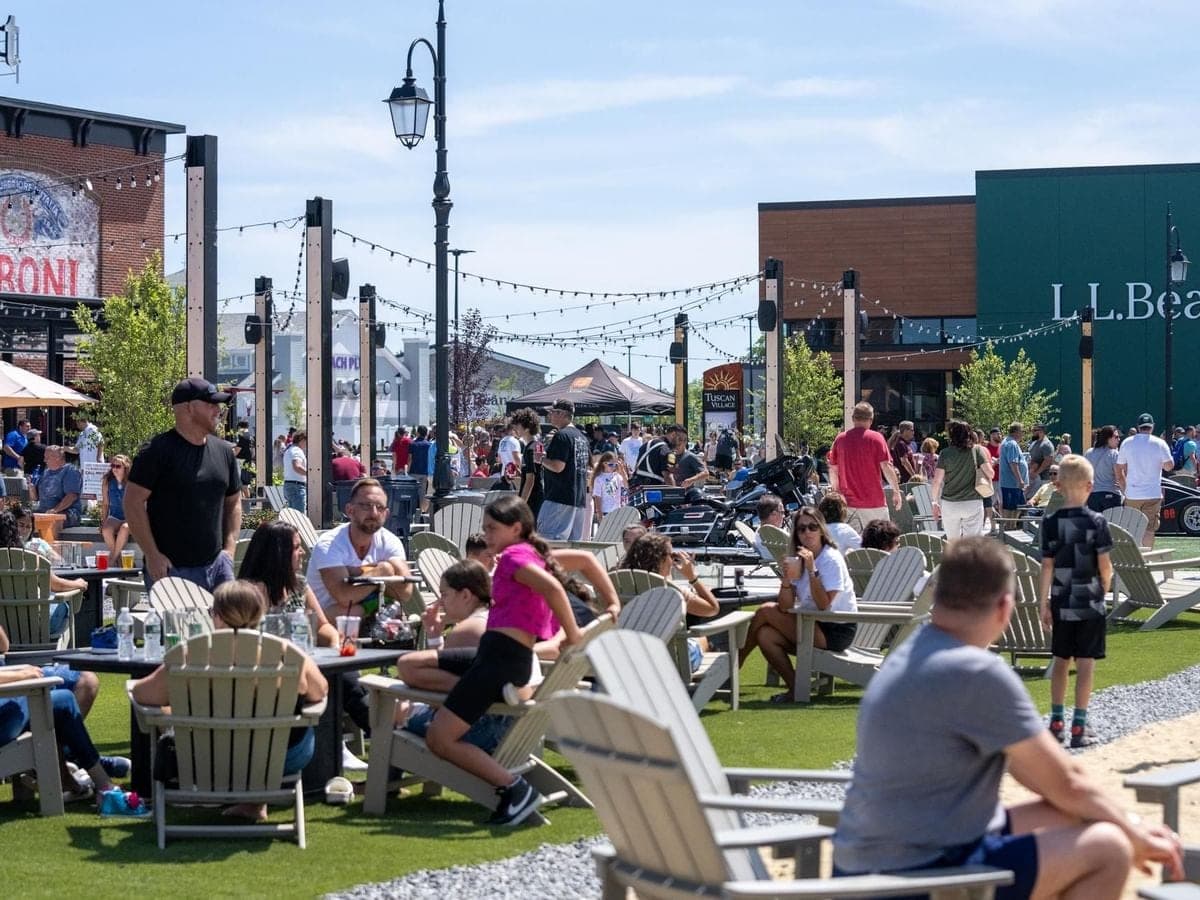
Tuscan is grocery-anchored. The Tuscan Market is the flagship, and it is the center of gravity for the whole development. Around it sit the townhomes, the condo buildings, the restaurants, a spa, a couple of boutiques, the summer concert lawn. Everything is walkable from everything. The sidewalks are real sidewalks. The landscaping is maintained by the HOA. None of that is a knock. It is just not what the rest of Salem looks like.
Price band: premium for new construction. Townhomes run materially higher than comparable square-footage older product on the Main Street side or in North Salem. You are paying for the newness, the HOA maintenance, the walkable amenities, and the fact that inventory here moves fast. Condos in the buildings sell at a different band again. HOA fees are real and vary by building, so read the condo docs.
Who it fits: downsizers who want no lawn and no roof to think about. MA buyers relocating from a planned community who want the HOA safety net. Professionals who want to walk to dinner and do not want to deal with the older housing stock's quirks. Not for you if you want a yard, a driveway you can park three cars in, or a house with a history older than your mortgage.
The Canobie Lake side: summer character folded into year-round living
Canobie Lake is the part of Salem that still reads as a New England lake community. Christian Avenue, Lakeshore Road, the Pond Street stretch that feeds the lake side. Older cottages that have been winterized over the decades. A few genuinely waterfront houses with docks. A much bigger pool of water-view homes one or two streets back that see the lake without touching it.
This is where the language matters. Waterfront and water view are two different price tiers. Waterfront means the property line touches the water and you have a dock or a right to build one. That is the premium-plus category, and there are not many of them. Water view is everything from a clear look down the hill to a seasonal glimpse through the trees when the leaves drop. The water-view homes run a meaningful premium over a comparable inland Salem house, but nothing like the waterfront premium. Out-of-town buyers frequently mix these up and set their budget wrong in both directions.
The character of the neighborhood shifts with the seasons in a way the rest of Salem does not. Summer is busier, boats, families at Canobie Lake Park across the way, traffic up and down Route 111. The off-season is genuinely quiet. Some of the streets have more year-round residents now than they did twenty years ago, because the winterized cottages keep getting bought and upgraded into real houses. This is not a summer-only neighborhood anymore, but it carries the memory of one.
Price band: waterfront is premium-plus, sometimes well into seven figures for a properly sited house with a dock. Water view is a real but smaller premium. Inland on the lake side, a block or two back, you are often at or slightly above the Salem median. If the listing says "Canobie Lake area" and you cannot see water from the photos, you are paying for proximity, not view.
Who it fits: buyers who want the lake as a lifestyle, not as a weekend. Families who want their kids to swim in summer and have a real neighborhood in winter. Empty-nesters who want the water view as the reward for thirty years of colonial living.
Salem schools: the piece nobody explains clearly
The Salem school district is its own elementary-through-high-school system. Barron Elementary, Lancaster, Fisk, and Haigh feed up. Woodbury is the middle school. Salem High is the high school. It is a full in-town system, which is one of the things that separates Salem from Derry, where the high school is Pinkerton Academy, an independent school that most Derry students attend on a town-tuition basis.
The practical difference: in Salem, you are in the same district from kindergarten through twelfth grade and the buildings are physically inside the town. In Derry, the path is public K through 8 and then Pinkerton. Both systems have their advocates. Parents coming from Massachusetts frequently do not realize that Pinkerton is an independent school until they are already under contract on a Derry house. In Salem there is no such surprise. Your kid goes to Salem High.
Feeder patterns inside Salem matter for a few elementary choices, and they shift occasionally. Barron tends to draw from the downtown and northern parts of town. Lancaster pulls from the southern side toward Methuen. If the elementary school is a deciding factor for you, do not assume the listing's neighborhood tells you the zone. The district lines are specific and they are worth pulling before you write an offer. I can send you the current feeder map on a call.
For buyers comparing Salem to Windham or Londonderry, the public-school picture is the biggest single structural difference. More on that in the Windham, Derry, or Londonderry buyer's guide.
Commute realities: I-93, Route 28, and what the GPS does not tell you
Salem's commute math is built around I-93. Exit 2 is the local ramp, off Pelham Road. Most Salem commuters use it going south toward Boston or north toward Manchester. Exit 3 is Windham's, and on heavy-traffic mornings some Salem drivers from the northern neighborhoods skip over to it.
Going south to Boston, the Salem-to-downtown-Boston run is roughly 45 to 55 minutes on a clean morning, 60 to 75 on a bad one, and regularly longer than that when weather or an accident stacks up I-93 south of Methuen. The Exit 2 park-and-ride has Boston Express Bus service that a lot of Salem commuters swear by, and if you are moving from a Massachusetts town where the T was your default, the bus is worth trying before you commit to driving every day.
Going north, Route 28 is how you get around locally. If you are running errands, going to the mall, heading to Market Basket, or driving your kids to sports at Canobie Lake Park, you are on 28. It is not a commuter road, it is a local road, and traffic patterns on it are completely different from I-93. From North Salem, Route 111 connects you east to Windham and west to Derry without touching the highway, which is how locals skip the commercial stretch when they need to.
For MA buyers coming from Methuen, Andover, or Haverhill, the honest answer on the commute is that Salem is further from Boston than you are used to, and the winter mornings are longer. It is a real trade, and the tax savings have to justify the extra thirty to forty minutes of windshield time per day. For buyers coming from further south in Massachusetts, Salem is usually a win even after the commute adds up.
How to choose which Salem fits you
The short version: pick the Salem that matches how you actually live, not the one with the best photography.
If you want a yard, quiet streets, and do not need walkability, you are looking at North Salem. If you want a downtown feel, character housing, and restaurants in walking distance, you are looking at the Main Street corridor. If you want no maintenance, new construction, and HOA-managed everything, you are looking at Tuscan Village. If the lake is your reason for buying a house at all, you are looking at the Canobie side and you need to know whether you are actually paying for waterfront or for a view.
The price bands overlap enough that a lot of buyers can afford more than one of these, and that is usually where the decision actually gets made. Not on the Zillow filter. On a Saturday driving through all four and feeling which one sounds right when you roll the windows down.
If you want that Saturday with a local who will tell you the truth about each one, book a 30-minute call and we will map your search to the Salem that actually fits. Just a real conversation about your list, on your timing, and your details stay with me instead of Zillow's lead routing. If you are still deciding between Salem and the towns just north, start with the Windham, Derry, or Londonderry buyer's guide. And if you want the full map, the neighborhoods overview has each of these broken down alongside Windham, Derry, Londonderry, and Pelham.